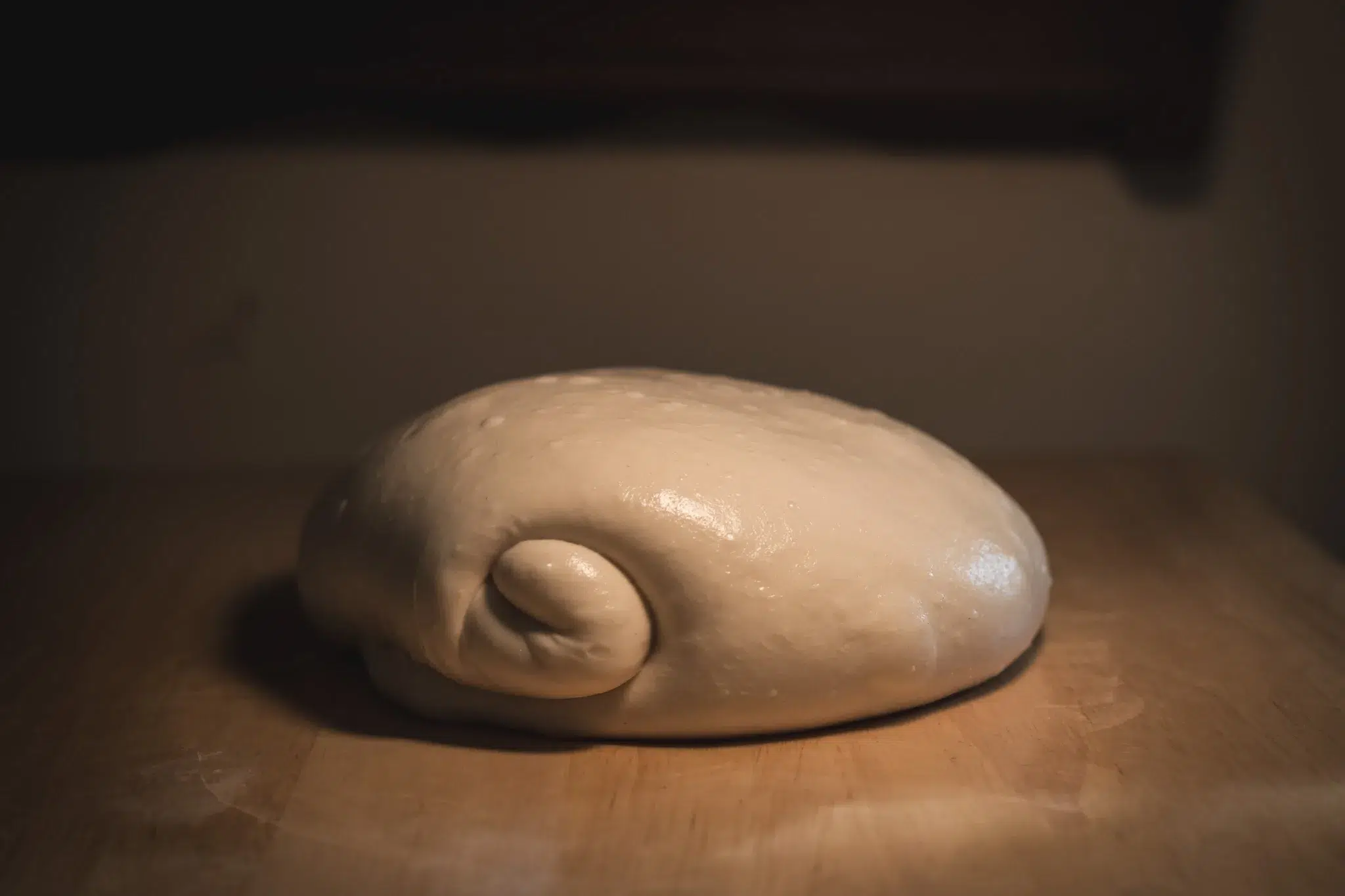
When I’m teaching sourdough, one of the biggest barriers for new bakers is the process and the lingo. I often see eyes glaze over when I mention “bulk fermentation” or “oven spring”, which is perfectly understandable. Understanding these terms is essential to following sourdough recipes and learning how to improve your own. I write lots of blogs about different aspects of baking, but this one is the ultimate authority on the sourdough process explained.
This post may contain affiliate links, which means I make a small commission at no extra cost to you. You can view my Privacy Policy Here.
Mix
Flour, water, and starter are mixed first. This can be done by hand or in a stand mixer. One thing to remember here is that you do not need to fully knead or mix the dough. A rough combining of the ingredients is enough before we start the autolyse.
Autolyse
Autolysing combines the flour, water, and starter and allows the dough to hydrate before adding salt. I wrote an entire blog on this process and why you should always autolyse your dough, but I’m going to include an excerpt here:
“As soon as water is added to flour, starch and proteins start to break down by the endogenous enzymes present. Salt changes the way dough ferments because it slows down the fermentation process, preventing the enzymes from eating the food source (flour and water) too quickly. Salt also dehydrates the dough slightly, drawing moisture out through osmosis. This process is necessary for elastic and flavorful sourdough. We autolyse sourdough without salt so that the enzymes have a chance to get started eating their food and the water can hydrate the flour before the salt can begin its own chemistry.”
Bulk fermentation
The bulk fermentation occurs at room temperature anywhere from a few hours to overnight, depending on the dough’s hydration. Higher hydration doughs can over-ferment, so their bulk ferment needs to be shorter. Dryer recipes can bulk ferment for much longer. Either way, unlike industrialized yeast, sourdough requires longer for gluten to develop. One of the best ways to develop gluten is to stretch and fold the dough during the bulk fermentation.
Stretch and fold
Stretch and folds (or coil folds) are methods for developing gluten and strengthening the dough. This part of the sourdough process lets oxygen into the dough, builds strength, and develops the gluten. This part of the bulk fermentation needs to be performed every 15-45 minutes (depending on the recipe) for a few hours. Each side of the dough is stretched and then folded over itself. The dough becomes more elastic and stretchy throughout this step.
Pre-shape
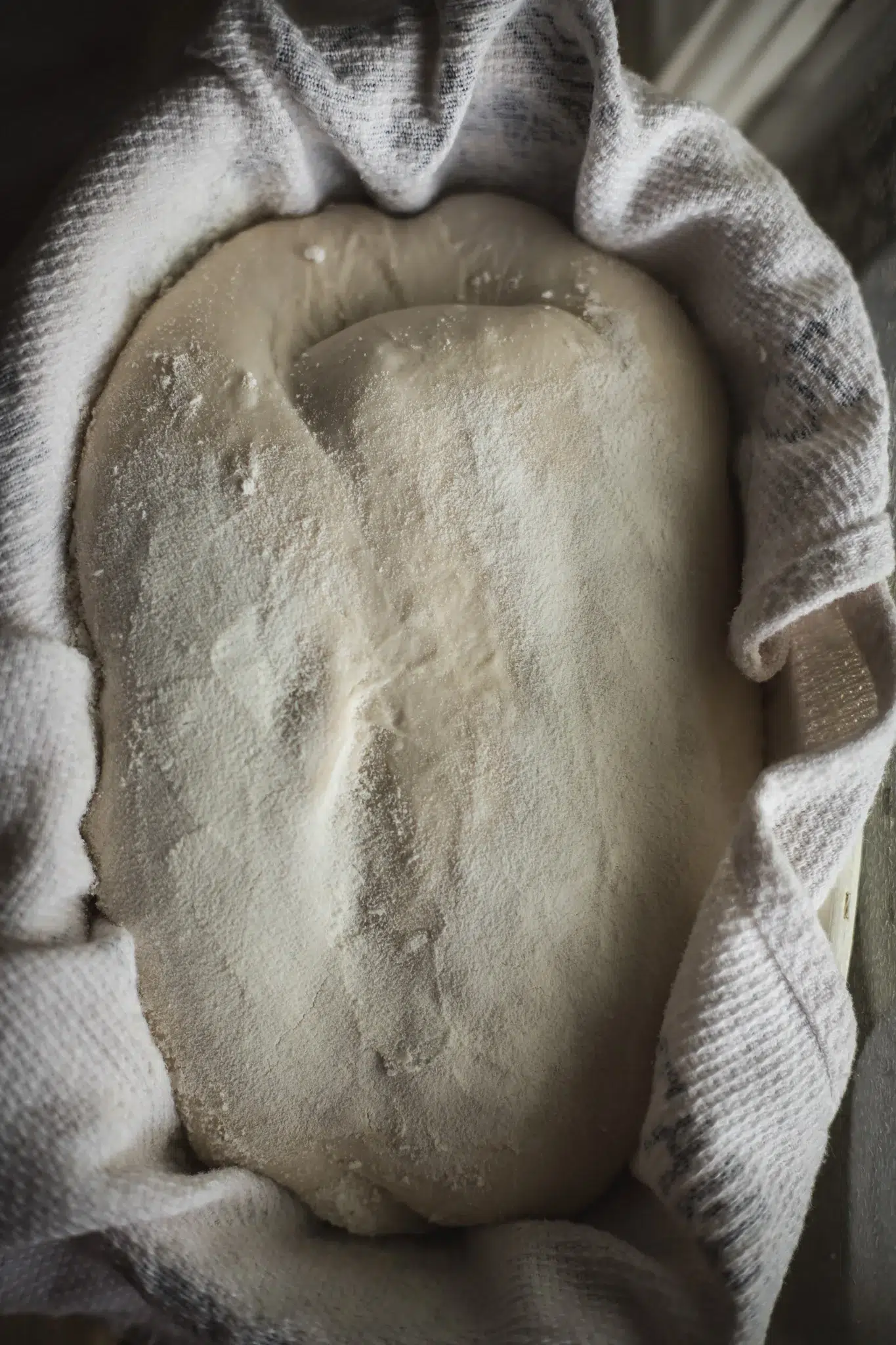
Pre-shaping might seem like an unnecessary step in the sourdough process, but it is essential to building tension and proper shaping of the dough. The preshape gently forms the dough into a tight ball before resting for 15-30 minutes. This prepares the dough and gives it the chance to loosen for a more intense final shaping.
Shape
The final shaping of the dough is your last chance to build lots of tension and strength. To shape, fold both sides into the middle and roll up the dough so that the seam side is on the bottom. Now you can add a little bit of flour to the round top of the dough.
Next, use the unfloured surface to create tension by moving the dough in a circular motion with the pinky edge of your hand. As you drag and twist the dough against the surface, you will notice it becoming a tighter ball. When the ball feels like it can’t get any tighter, stop. Flour your dough and place in a floured banneton basket, seam side up (flour this side as well).
Cold Fermentation
The cold fermentation is a very helpful part of the sourdough process. Cold slows down fermentation, which means you can further develop your dough without risking over fermenting. Resting dough in the fridge allows the gluten and flavor to develop further as well as better scoring and oven spring when the dough is baked directly from the fridge.
Sourdough Ingredients and Supplies
- Organic, unbleached bread flour
- An active sourdough starter
- Filtered water
- Natural Mineral salt
Bread Baker with Lid
~I love using my Le Cruset or my clay Baker from Breadtopia. Be sure to use an oven-safe, heavy bottom pot with a lid.
Bread Banneton
~for bulk fermenting your dough
A Kitchen Scale
I like to work with an inexpensive one from Amazon.
Bread Lame
~to score your dough. This is the one I use and love!
A fermentation crock or bowl with lid
For rising and fermenting your dough
Sourdough process lingo
Bread lame
A bread lame is the blade and holder that is used to score your sourdough. They come in many different styles, but this kind has been my favorite for years.
Oven spring
Oven spring refers to how much your dough rises up in the oven.
Over-fermentation
Over-fermentation happens when the dough bulk ferments for too long and too much of the gluten structure breaks down. This can lead to dough that does not hold shape, doesn’t spring much in the oven, or has a very dense crumb. This often results from fermenting the dough at too high of a temperature or for too long at room temperature. This common mistake is why paying attention to temperature and time is critical when learning the sourdough process.
Crumb
The crumb is the inside texture of the dough. Are there lots of holes? Is it moist or more dry? Does it look dense or underbaked? Looking at the crumb can tell you a lot about your mistakes or successes in the sourdough process.
Ear
The ear is the distinct flap that opens when the dough is scored lengthwise. It kind of looks like an ear. In addition to being aesthetically pleasing, this is an indicator of a well-fermented and shaped loaf. A distinct, well-formed ear shows that the dough was properly developed and not over-fermented.
Proofing basket
This is the banneton basket or bowl you place your dough in after its final shape. This is one of the last steps in the sourdough process. Some baskets come with a liner, some people use a flour-lined tea towel. Others just put the bread straight in there! You will need to experiment and see what you like best.
Leave a Reply