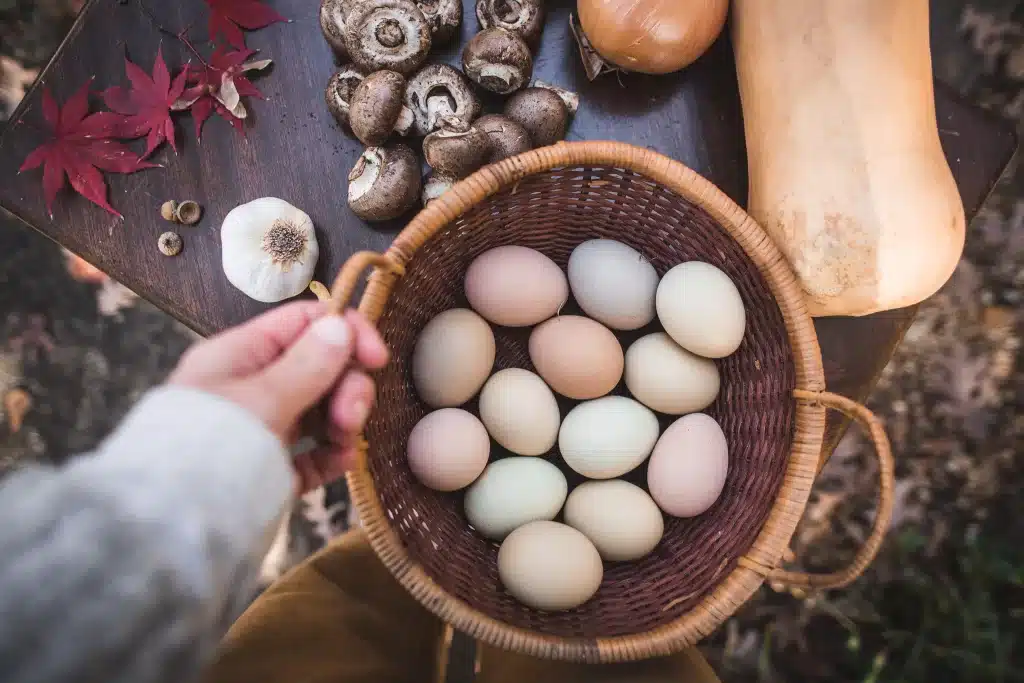
When I got married this past spring I moved into a quirky, unrenovated house from the 1960’s. Among its many eccentricities, this home has a beautiful walk-in pantry complete with slots for baking stones, built-in shelves, and many hooks for hanging storage. At first I was daunted by this empty room and how I would fill it, but it didn’t take long for me to unpack glass jars, aprons, canvas bags, small appliances, and of course, lots of food into the pantry. This is how my journey of stocking the larder and cultivating a working, practical, and useful pantry began.
What is the larder?
The larder is a cool, dark room where food is stored. Traditionally this is where raw meat preserved in lard was placed for long term storage. By the 18th century, the larder was also used to store bread, milk, butter, eggs, and cooked meats before modern refrigeration. The larder was also a place to store other food such as canned vegetables, fermented vegetables, root vegetables, grains, and more shelf stable ingredients.
How is the larder different from a modern pantry?
Some might see the two as very similar if not the same, but I beg to differ. The modern pantry holds many pre-made, store-bought food like cereals, boxed meals, packaged snacks, and cake and biscuit mixes which cycle in and out of the cupboard. This is how many modern people stock their pantry. The larder, in comparison, is storage for ingredients to create meals and often home-canned and home-preserved foods. The larder is a living part of the kitchen that requires attention and tending. This way of eating and cooking requires a different philosophy than that of the modern consumer.
This post may contain affiliate links, which means I make a small commission at no extra cost to you. You can view my Privacy Policy Here.
Stocking the larder is a practice and an art
The philosophy of the larder
I generally posit that the characteristics of the larder rely on the philosophy of those who use it. Many modern Americans are very removed from food storage and preparation (and no, frozen pizza doesn’t count!). Before the last 100 years it was very common for kitchens to be well stocked with shelf stable, seasonal ingredients which could feed a family throughout the year. These ingredients usually came from the gardens or local farms. Of course we now have access to refrigerators, deep freezers, freeze dryers, and vacuum sealers, but that doesn’t mean our food philosophy needs to change. Stocking the larder is about rejecting convenience culture and cultivating the artistry of our ancestors to provide food for our families.
“The first supermarket supposedly appeared on the american landscape in 1946. that is not very long ago. until then, where was all the food? dear folks, the food was in homes, gardens, local fields, and forests. it was near kitchens, near tables, near bedsides. it was in the pantry, the cellar, the backyard.”
“Food security is not in the supermarket. It’s not in the government. It’s not at the emergency services division. True food security is the historical normalcy of packing it in during the abundant times, building that in-house larder, and resting easy knowing that our little ones are not dependent on next week’s farmers’ market or the electronic cashiers at the supermarket.”
― Joel Salatin, Folks, this Ain’t Normal
An ancestral approach to food storage
There are so many reasons to cultivate an old-fashioned larder that can be different for everyone, here are mine:
- To know what is in my food
- To refine my skills at preserving, storing, planning, and keeping food
- To reduce my dependency on convenience foods
- For my health
- Because a pantry full of beautiful ingredients inspires me to create
- To save money by purchasing in bulk
Beauty Matters
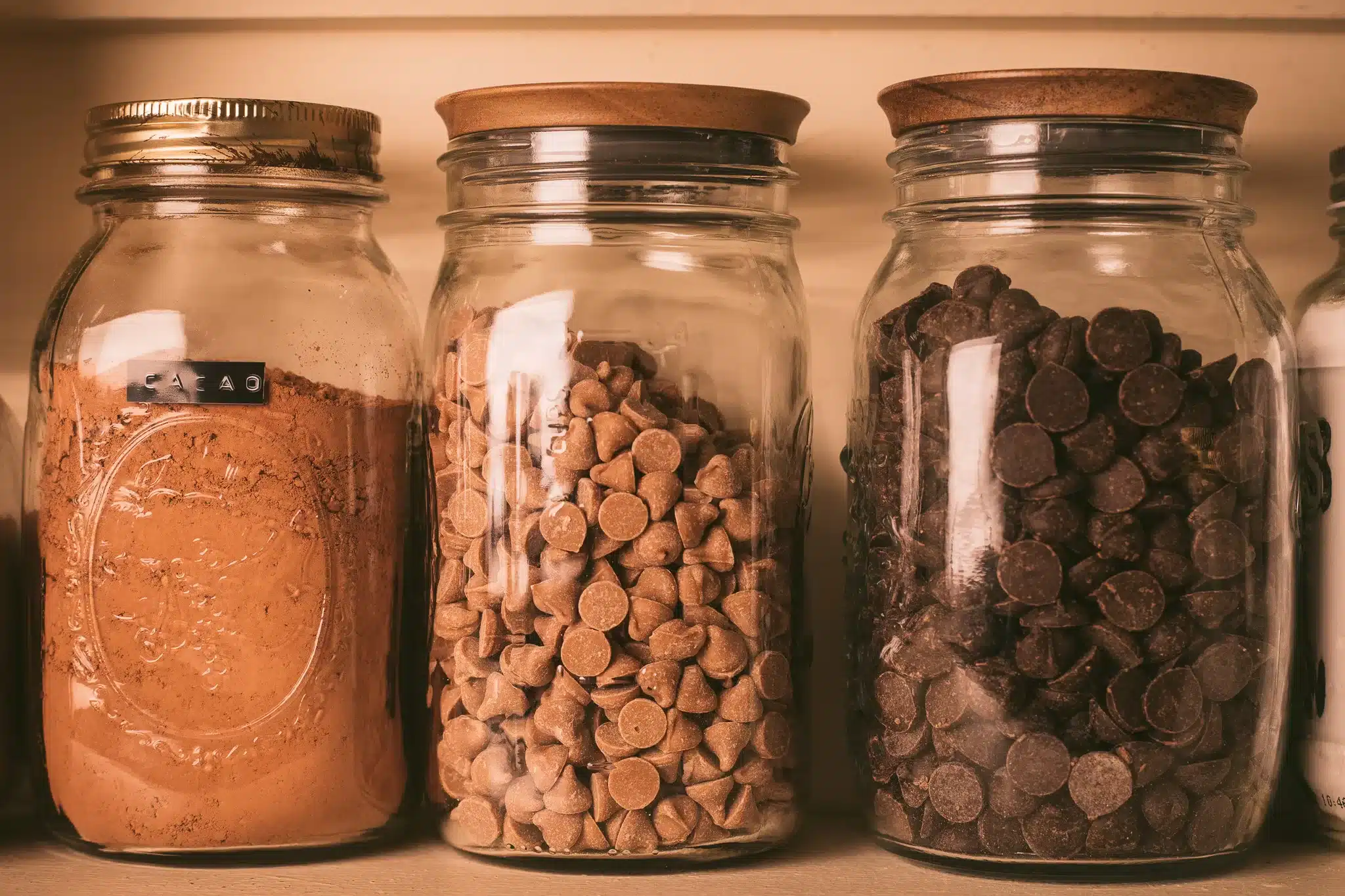
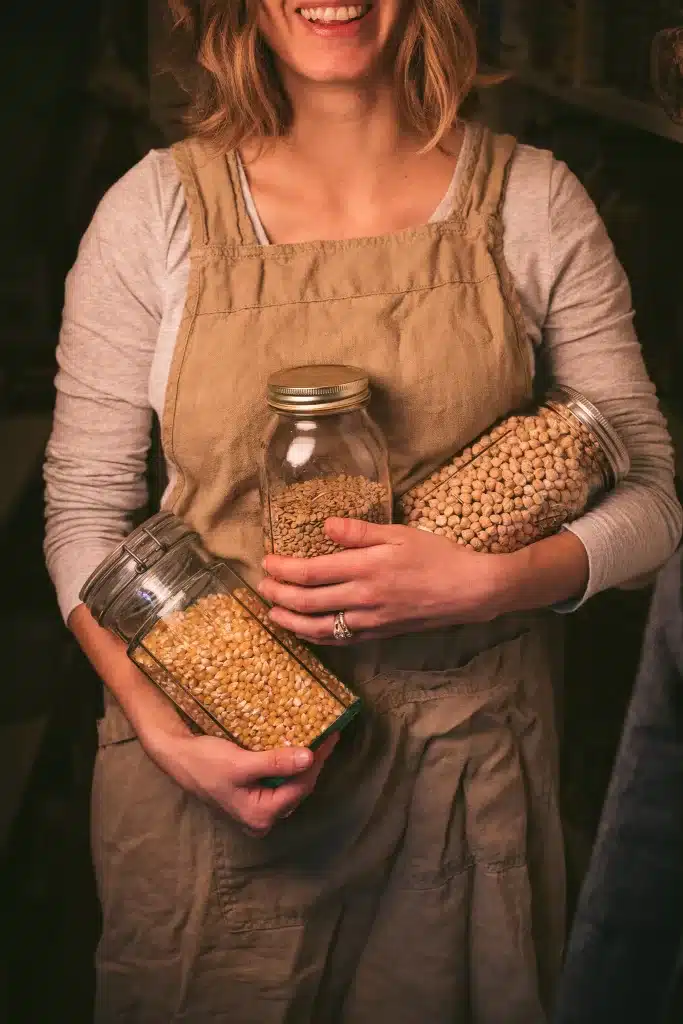
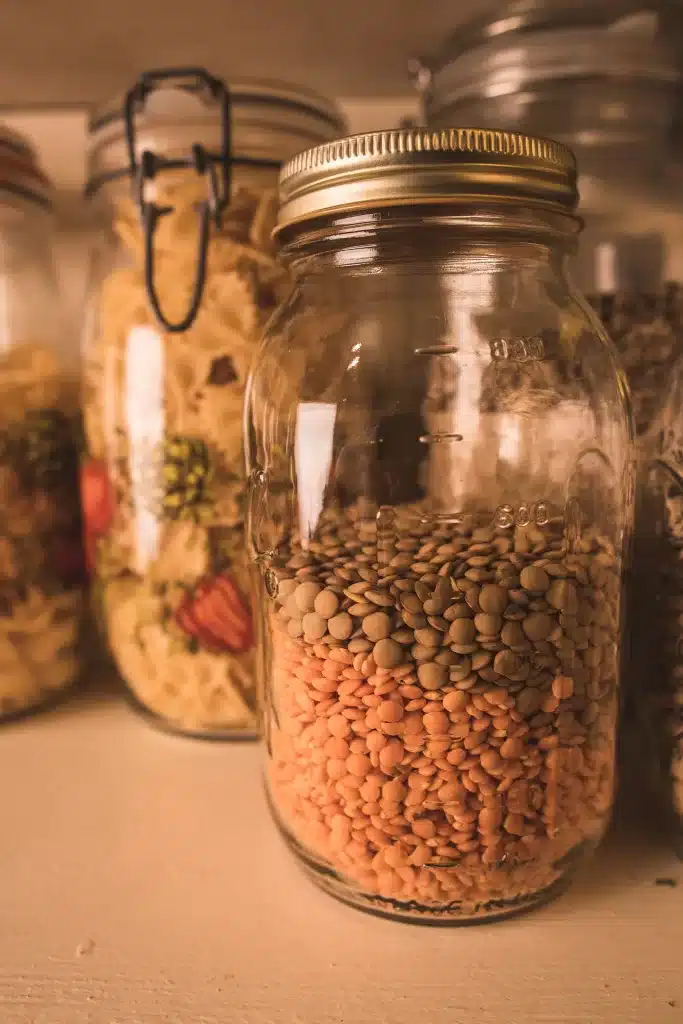
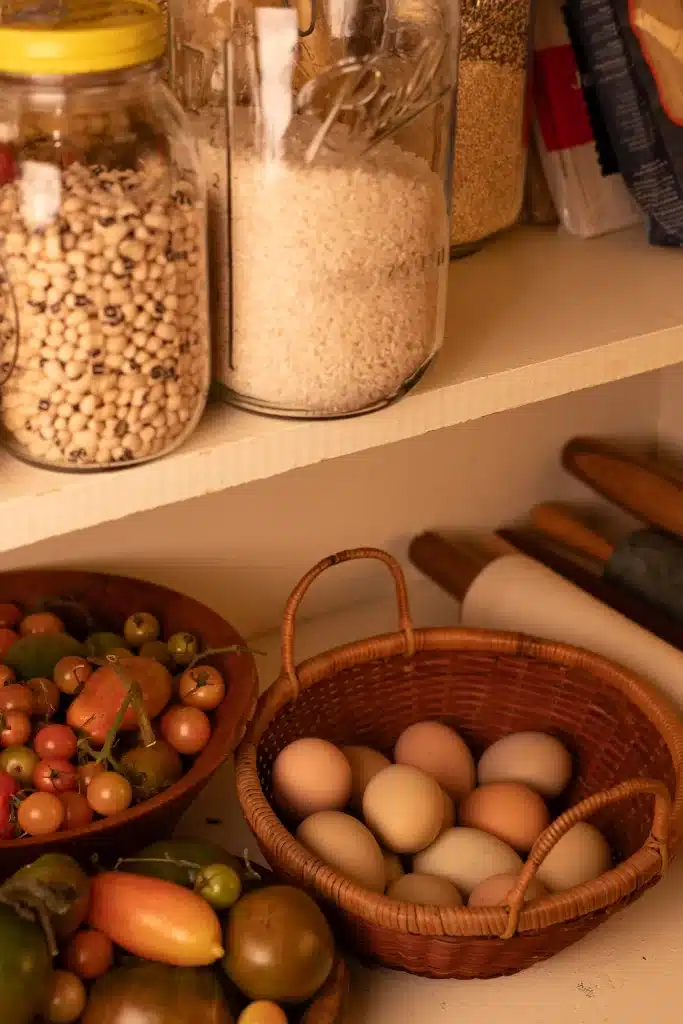
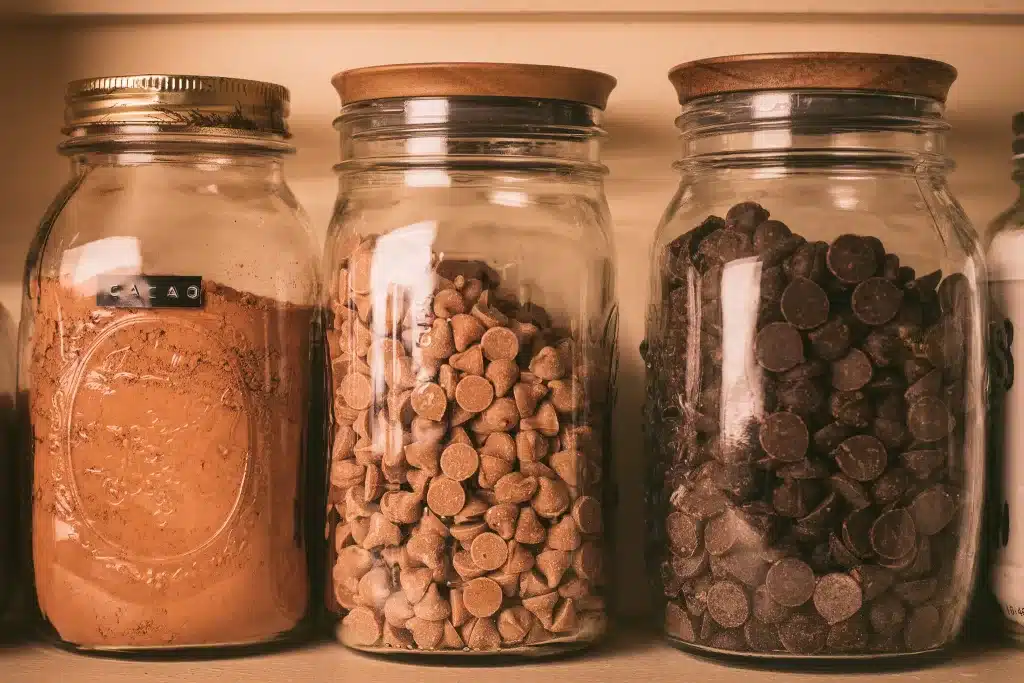
When organizing and socking my larder, I always think of how I want the space to look and feel. It is well known that we eat with our eyes so displaying stored food in a way that is pleasing and beautiful is essential to keeping a larder. When my ingredients are arranged and displayed beautifully, I feel much more inspired and creative in the kitchen. As you can see from my photos, I love to do this with jars, wooden bowls, antiques, and fresh fruits and vegetables.
Supplies I use to stock and keep my larder
- Two-quart glass jars
- One-quart glass jars
- Wooden and metal wide-mouth storage lids
- Wooden bowls
- Label maker
- Funnels
- Linen aprons
- Magnetic dry-erase board for grocery lists and planning
Stocking the Larder
The first step is to stock your larder with the ingredients you want to work with. This process will look different for everyone as we customize our pantries to our particular tastes, preferences, and storage options. This process is unique for everyone and you don’t have to live on a farm, or have a walk-in pantry, or a root cellar to stock a charming and functional larder.
The modern larder will usually include:
Dried goods
Grains, beans, sugars, nuts, seeds, rice, noodles, etc.
Ferments
Kombucha, sauerkraut, sourdough starter, garlic honey, kefir, kimchi, pickles, lacto-fermented veggies, etc.
Canned goods
Tomatoes, broths, jams, and anything else you like to can or buy
Storage produce
Garlic, onions, squash, apples, potatoes, carrots, cabbage, etc.
Appliances and other kitchen supplies
I store my gravity fed water filter, baking stones, rolling pins, aprons, teapots, extra jars for canning or storage
While it is still evolving, my larder includes a combination of all these things. Because we are blessed with such a large walk-in pantry, it stores many of our kitchen appliances as well as shelf-stable foods. This space is always a work in progress. This month in my larder, I have been slowly ripening green tomatoes picked a few weeks before the first frost, so my wooden bowls are filled with tomatoes in various states of ripeness. Soon I will can the tomatoes and fill the larder with kombucha that will ferment for a few weeks. Thus the larder is always changing with the needs of the kitchen.
To stock our larder, we buy many items in bulk from local shops or online. Here are a few of my favorite places to shop bulk:
Azure Standard– For all the bulk, organic goods
Mountain Rose Herbs-for herbs, teas, medicinals, and more
Keeping the Larder
I like to think of the larder as a living part of my kitchen because it needs a little tending. There are certain ingredients that I make sure we never run out of such as flour, sugar, rice, and root vegetables. This means that whenever I enter our pantry, I am taking stock of what we have and what we need. One of the many things I love about using large glass jars for food storage is that I can buy in bulk which is less expensive and more convenient. Whenever I notice a jar running low, I simply make a note on our grocery white board (which is attached to the side of the fridge) as a reminder when it comes time to go to the grocery.
Another factor of keeping a larder is getting creative with ingredients and using things up before they go off. This means that if I notice I have too many squash and some are going soft, I know it’s time to add some to soup that night or bake and puree a few before storing in the freezer. It also means I am using my label maker to designate seemingly mysterious ingredients in glass jars, regularly doing a dry goods audit to use up forgotten grains or popping corn, keeping a clean crock ready for pre-soaking beans, rice, and grains, and mixing up a big batch of sourdough bagels when you have an excess of starter. All of these actions help to reduce food waste, save money, and create delicious, frugal, from-scratch meals.
Eating from the larder
Enjoying the fruits of your labor is the best part of keeping an old-fashioned larder. Learning how to cook completely from scratch and how to use the delicious ingredients you keep is an art form that I am always practicing. I would recommend you start with a book like The Art of Simple Food or Nourishing Traditions to cultivate these time-honored skills. When the days grow dark and cold and the harvest slows, we rely more than ever on the larder as the backbone of nourishing soups and stews, hearty loaves of seedy sourdough, and fermented foods to nourish and heal our guts. I love knowing where my food comes from and how to make the things that nourish and heal our bodies, especially during the winter months.
Love reading your stories. The simplicity of the way you live is captivating and healthy for the mind, body and soul.
I wish you had taken a picture of your larder. I am in the process of re-doing my pantry and it would have been helpful to see yours.
Happy Thanksgiving from Northern Virginia
Hey, Kristine! I went ahead and included a few photos for you above! I don’t have very many good photos of my larder because it is a very very dark room in my house, but I did my best to capture it! Wishing you the best as you get to work on your own pantry 🙂
xo,
Regina