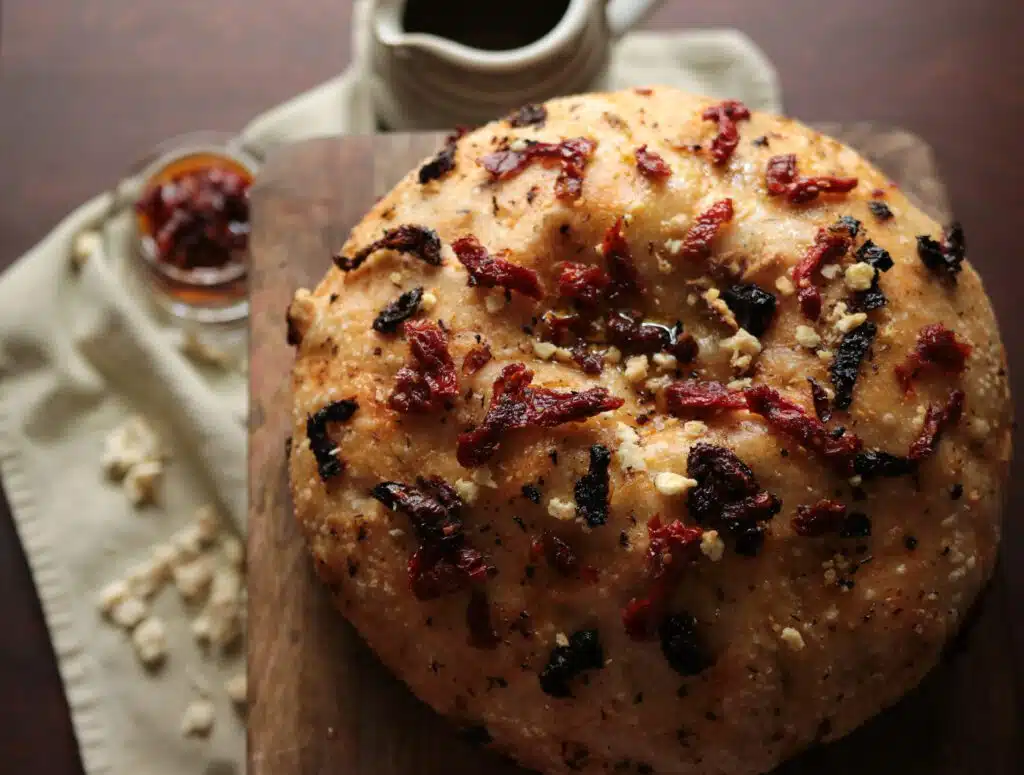
This sourdough focaccia recipe is so soft and chewy, you will wonder why you ever make any other kinds of bread! The best part is how easily the dough comes together without any stretching or folding, just mix it and forget it. From much trial and error, I’ve learned that a high-hydration dough yields the most fluffy and chewy focaccia. With lots of good salt and a really nice olive oil, this simple bread becomes a delicacy.
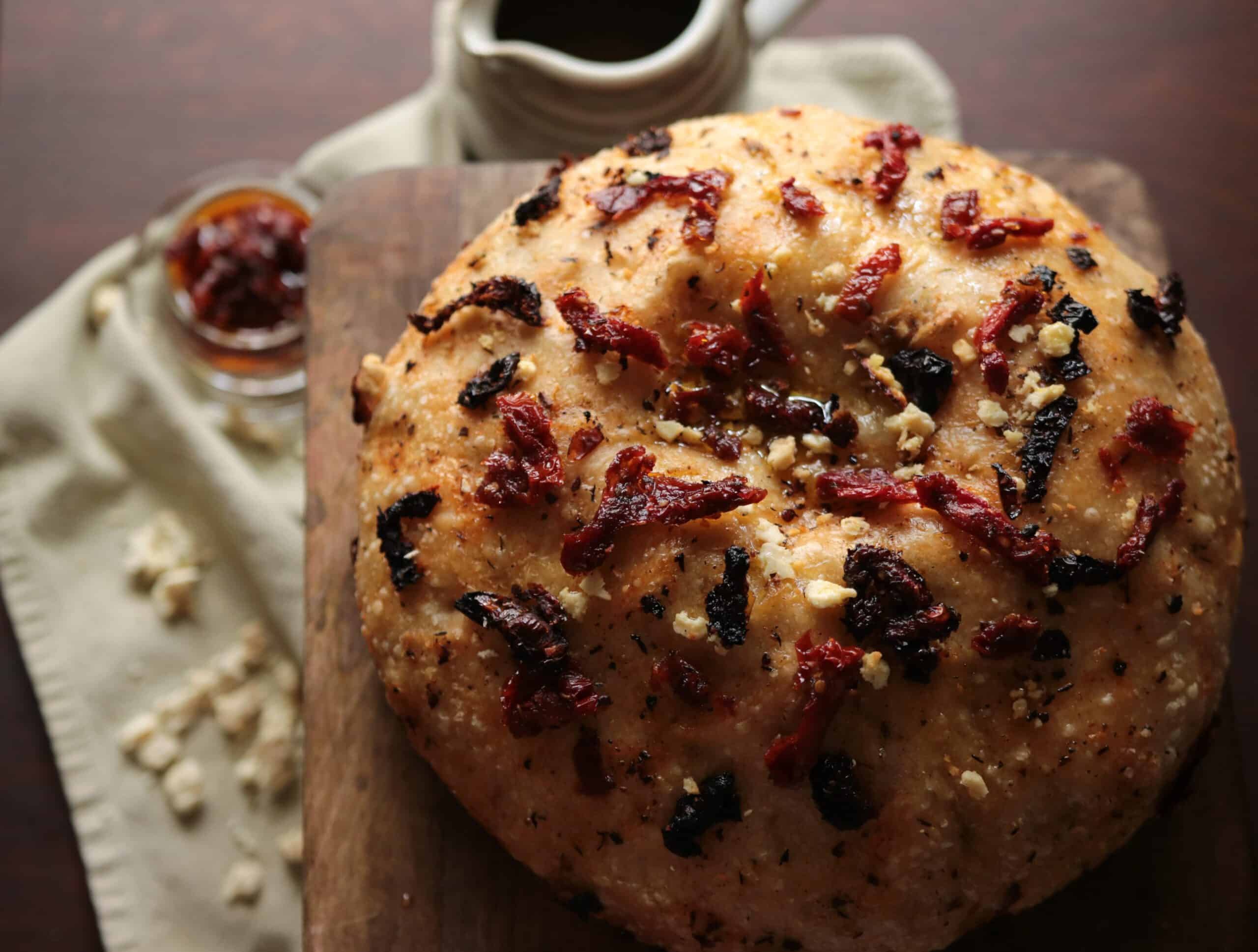
This Focaccia is completely customizable. You can add any seasonal toppings you have on hand. For this recipe, I chose to add sundried tomatoes, feta, and kosher salt but you can really get creative with it and add whatever you like.
Jump to RecipeThis post may contain affiliate links, which means I make a small commission at no extra cost to you. You can view my Privacy Policy Here.
My favorite focaccia topping ideas:
- Parmesan
- Fresh herbs
- Edible flowers
- Green onions
- Roasted garlic
- Goat cheese
- Tomatoes, fresh or sundried
- Olives
- Roasted red peppers
- Nuts and seeds
How to keep toppings from burning
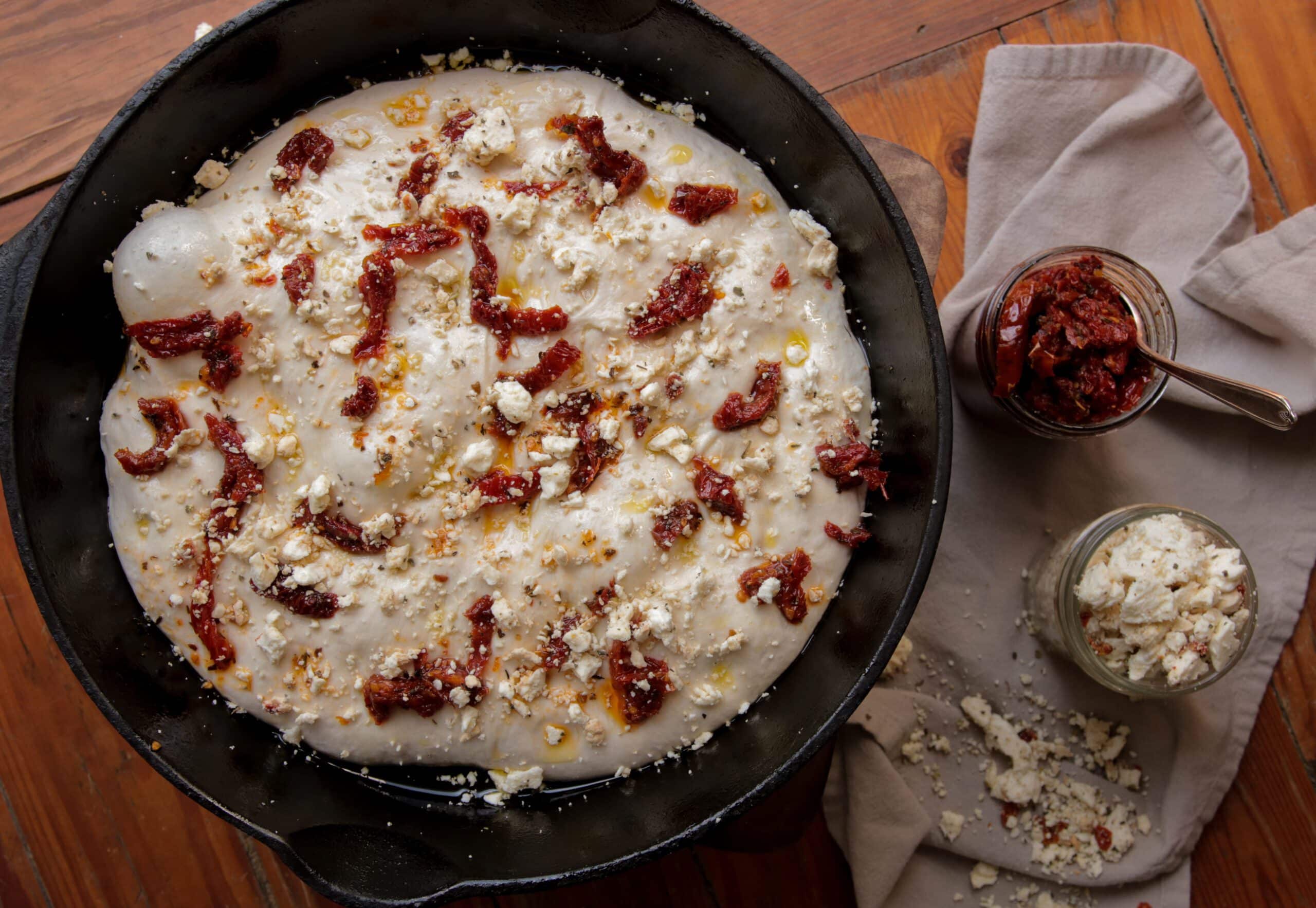
After the final dimpling of the dough, you can press toppings into the dough to prevent burning. You can also add more delicate toppings halfway through the baking process. For example, garlic will burn much faster than green onions so it would make sense to add garlic after the bread has been in the oven for a while. You can assess on a case-by-case basis which of your toppings are more likely to burn.
A few tips for making the perfect Sourdough Focaccia
From my recipe testing I made a few mistakes that could have been prevented had I known the following tips:
Do not be afraid to dimple the dough
When I first tried sourdough focaccia, I was terrified of handling the dough. After making lots of sourdough loaves where I need to be very gentle in order to preserve the bubbles and gas built up, I brought that same approach to focaccia. I later realized that the focaccia is very forgiving. Dimpling the dough well will keep it from puffing up too much.
Spread it out over the surface of the pan
Another way to keep Focaccia from puffing up too much is by spreading it out over the surface of your pan. One mistake I made was baking mine in a cast iron that was too small to allow the dough to be spread out. This caused the dough to be too puffy. When you make this recipe I would highly recommend you use a larger cast iron or a sheet pan with sides.
To make this recipe you will need:
- Organic, unbleached bread flour
- An active sourdough starter
- Filtered water
- Natural Mineral salt
- Organic Olive Oil
Deep dish cast iron or stone
A deep dish cast iron or stone are the two best options for baking your sourdough focaccia.
A Kitchen Scale
I like to work with an inexpensive one from Amazon.
A fermentation crock or bowl with lid
For rising and fermenting your dough
Serving Sourdough Focaccia
This is the kind of bread that tastes amazing on it’s own or served with almost anything. I like to slice horizontally through a square of focaccia to make a sandwich or toast to serve with charcuterie. You can also add pizza toppings and pop it back into the oven for a deep-dish pizza-inspired creation.
Working with a high-hydration recipe
A high-hydration dough gives the best sourdough focaccia results possible: chewy, soft, with a lovely crust on the bottom. That being said, this dough is very sticky and loose, especially when the ingredients are first combined. If it looks too soupy, don’t despair! Let it rise and wait, I promise everything will come together in the end.
The Best Sourdough Focaccia Recipe
Ingredients
- 150 g starter
- 400 g water
- 500 g flour
- 10 g salt
Instructions
- Weigh and mix the wet ingredients together first
- Add the flour and allow to autolyse for 20-30 minutes
- Add salt to the dough and combine everything well. The dough will be very sticky, but don't worry, this will not be a probelem later (see my note about hydration above)
- Place the dough in a well oiled bowl and cover. Leave the dough to rise on the counter overnight
- the night morning, place the dough in a well oiled rectangular baking pan, large cast-iron skillet, or dutch oven (I like to use a 9×13, but you can use a smaller pan for a thicker focaccia)
- Allow the dough to rise again for about 1 hours (it’s okay if you need to go a little over or under this time as the dough is very forgiving)
- After a few hours, the dough should be fairly bubbly and puffy
- After the 2 hours has pasted, preheat your oven to 425 F.
- Coat your hands in olive oil and gently spread the dough out over the surface of the pan. You can really pull at it here but try not to flatten it with your hands.
- Drizzle with more olive oil and dimple the dough with your fingers or knuckles being sure to make large and small dents
- Add your toppings of choice, pressing them into the dough. I added sun-dried tomatoes, sea salt, and feta.
- Bake uncovered for 30 minutes
- Tint the bread with tin foil and bake for another 10 minutes
- This bread is best enjoyed hot and fresh from the oven
I used an enamel Dutch Oven and followed the recipe, used oil in the oven. however, the bottom burned and the bread did not get done
Oh no!! You may want to check the temperature of your oven (mine runs a little cooler than what it tells me) but yours may be running a little hot. I would recommend trying again with a slightly lower temperature, making sure it’s on the center rack, and keeping a close eye on it for burning.
hope this helps,
xo,
R